Desk 02 · 10 stories
Money & Contracts
Budgets, contracts, draws, allowances, and the paperwork that decides who pays for what.
Featured guide
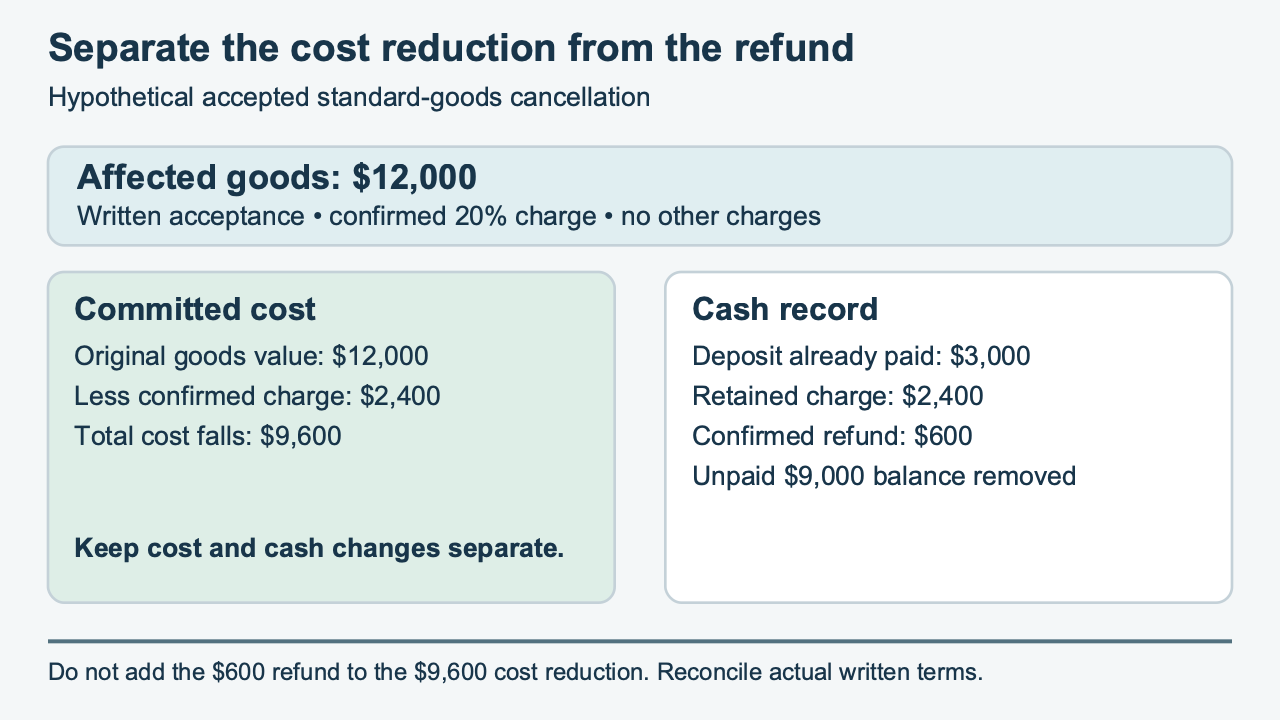
Request a Furniture Order Reduction When the Opening Plan Shrinks
Separate the furniture quantity you no longer need from the reduction a supplier accepts, then reconcile cancellation charges, deposits and the remaining order before revising the opening budget.
02
The complete desk
All Money & Contracts guides
-
02
Budget Desk
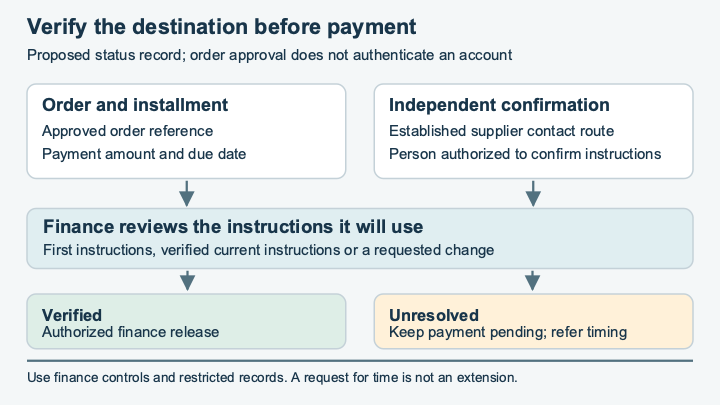
Verify Furniture Payment Instructions Before Sending the Deposit
Keep order approval separate from payee verification, and check new or changed furniture payment instructions through an independently established contact before money moves.
-
03
Budget Desk
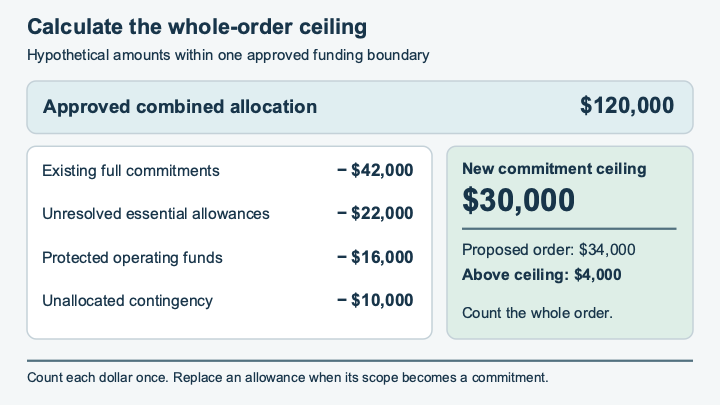
Set a Furniture Order Ceiling Before Paying the Deposit
Work out how much new furniture commitment the opening budget can carry after existing orders, unresolved essentials and protected reserves are counted once.
-
04
Budget Desk
A Working Framework for the Fit-Out Budget
Not a benchmark table: a thinking tool. The nine categories every hospitality fit-out budget needs, the planning ranges that keep them honest, and the two lines first-timers always forget.
-
05
Budget Desk
Deposits and Draw Schedules: Where the Money Actually Goes Out
A fit-out budget tells you what things cost. It does not tell you when the cash leaves, and the when is what sinks first-timers. A plain-language guide to deposits, progress draws, retainage, and lien waivers.
-
06
Budget Desk
Contingency Is a Plan, Not a Cushion
Every fit-out budget carries a contingency line, and almost every first-time owner treats it as padding to be quietly spent. A Budget Desk argument for treating contingency as a managed reserve with rules: sizing, drawdown discipline, and the difference between risk money and wish money.
-
07
Field Notes
Who Insures the Half-Finished Room?
Between demolition day and opening night, your project is a pile of value that standard policies were not written for. Field notes on builder's risk, liability layers, certificates worth reading, and the FF&E sitting in a warehouse that nobody remembered to insure.
-
08
Budget Desk
Cost per Key, Cost per Seat: Handle With Care
The hospitality industry compresses whole build-outs into one number: cost per key for hotels, cost per seat for restaurants. Useful shorthand, dangerous arithmetic. A Budget Desk piece on what the ratios genuinely tell you and the five ways they lie.
-
09
Budget Desk
Fixed Price, Cost-Plus, GMP: What the Contract Decides Before Work Starts
Before a wall moves, the construction contract has already decided who carries price risk, who profits from surprises, and what your monthly money meetings will feel like. A plain-language tour of the three contract structures a hospitality owner will actually be offered.
-
10
Budget Desk
The Change-Order Economy
Change orders are where fit-out budgets actually die: not in the bid, but in the drip of mid-project paperwork that reprices the job one signature at a time. How the change-order economy works, why it prices the way it does, and how owners keep it honest.